


- MORE
- Herpes
- Hyperthyroidism
- Hypothyroidism
- Indigestion
- Infertility
- Impotence
- Injuries
- Insomnia
- Itching
- Kidney Stones
- Kidney Disease
- Low Energy
- Low Sex Drive
- Lung Disease
- Lyme's Disease
- Lymph Nodes/Glands
- Manic Depression
- Menopause
- Menstrual Problems
- Migraines
- Mitral Valve Prolapse
- Multiple Sclerosis
- Nausea
- Nursing
- Osteoporosis
- Parasites
- Parkinson's Disease
- PMS
- Polycystic Kidneys
- Polycystic Ovaries
- Poor Circulation
- Pregnancy
- Prostate Problems
- Sarcoidosis
- Sinus Problems
- Skin Conditions
- Stress Management
- Tinnitus
- Toothache/Abscess
- Ulcers
- Water Retention
- Weight Loss
- SEE ENTIRE LIST
- Acid reflux/ GERD
- ADD
- Allergies
- ALS
- Alzheimers
- Anemia
- Anxiety
- Arrhythmia
- Arthritis
- Asthma
- Atrial Fibrillation
- Bladder/Urinary
- Blood Pressure
- Bodybuilding
- Bone, broken
- Bronchitis
- Candida
- Cataracts
- Cholesterol
- CFS/CFIDS
- Cirrhosis
- Coffee substitute
- Colds & Flu
- Colitis
- Constipation
- Constipation/Child
- Colon Polyps
- Crohns
- Depression
- Diabetes Type I
- Diabetes Type II
- Diverticulosis
- Epilepsy
- Eye (Bags)
- Eye Disease
- Fever
- Fibroids (Uterus)
- Fibromyalgia
- Floaters (Eye)
- Gallstones
- Gout
- Hair Loss
- Heart Disease
- Hepatitis
- MORE

- Step One Beginners
- Step Two Cleanse
- Step Three Advanced
- 28-Day Total Body
- Candida-Herbal
- Cholesterol Cleanse
- Colon Cleanse 1
- Colon Cleanse 2
- Colon Cleanse 3
- Essential Oils
- Fertility
- Hormonal Balance
- Juice Fasting
- Kidney/Bladder 1
- Kidney/Bladder 2
- Kidney- Maintenance
- Liver/ Gallbladder 1
- Liver/ Gallbladder 2
- Liver/ Gallbladder 3
- Liver - Maintenance
- Parasite Cleanse
- Prenatal
- Postnatal/Nursing
- Stone Cleanse
- Product Instructions

- Natural Protocols Book
- Stop Medicine Book
- Where to Begin
- Get Product Instructions
- Eye Health Docu-Class
- Cardiovasc Docu-Class
- Thyroid Docu-Class
- Cancer Docu-Class
- Fatty Liver Docu-Class
- What Herbs to Take
- Power of Juicing
- Learn to Heal Yourself
- Learn Essential Oils
- Health Newsletter
- Our Herb Quality
- Breaking News
- Dangerous Meds



Don't Feel Anything
When You Take Herbs?...
Winter Immune Defense:
AntiViral Essential Oil Blend
Germ Shield
Lung Support
Cold & Flu Formula
Lobelia
Cider Blaster
Echinacea Premium
Help For Your Bladder:

K/B Herbal Tea
[Add to Cart]
[View Cart]
Join the Conversation:
Instagram:Facebook:



Do Essential Oils Actually Heal the Body?
- Listing of Essential Oils for Common Complaints
- Buy Dr. Foster's Essentials Therapeutic Grade Essential Oils
- Do Essential Oils Actually Heal The Body?
- What Exactly Are Essential Oils?
- How Essential Oils Work
- Frequencies of the Body in Health and Disease
- Frequencies of Various Foods and Herbs
- How To Use Essential Oils
- A Brief History of Essential Oils
- Essential Oils For Common Complaints
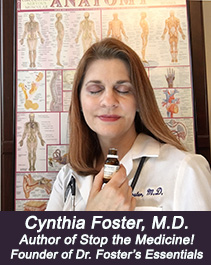
When
I mention the term Aromatherapy or essential oils as a healing modality,
immediately, one calls to mind lovely smells that may put you in
a better mood, but are not strong enough to do much else. One
of the reasons for this attitude is the lack of education in this
country about true therapeutic grade essential oils. Essential
oils are graded by quality. The lowest grade is used in perfumes,
a higher grade is used in foodstuffs, and the highest grade is therapeutic
grade. We are most familiar with the perfume grade which smells
nice, but has no therapeutic benefit.
Most Commercially Available Essentials Oils Do Not Work:
Unfortunately, most of the “essential oils” in stores today, although they may be useful as perfume or for aroma purposes, have little or no therapeutic value. They are commonly adulterated with solvents such as propylene glycol, acetate or alcohol. Some imported oils have even been found to contain radioactive isotopes. These adulterants are not healing, and many are actually quite harmful! True therapeutic grade essential oils are of a much higher quality and do not contain any adulterants whatsoever. Because of this, they also cost more. Therefore, compared to the cheaper, adulterated oil, the profits to be gained from selling higher quality oils is much smaller.
When I suggest taking eucalyptus oil, and you go to the health food store and buy a cheap version that is not certified, you find out that you get what you paid for. You thought you had saved yourself some money, when in actuality, you did yourself a huge disservice. You find that it has no effect other than smelling like eucalyptus and perhaps having a slight calming effect. Then you're still sick and I look like a fool. You lose faith in natural remedies and that one bad remedy makes the entire industry look bad. You then wrongly think that natural remedies don't work, and you start going to the medical doctor again - because the synthetic medications are at least having an effect.
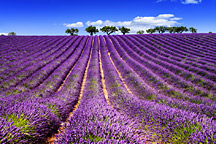
Lavender Field in France
In the case of pure lavender oil, it is the linalyl acetate component that helps to heal the burns. If the lavender oil doesn’t contain a high per cent of natural linalyl acetate – at least 50% - it will actually burn the skin instead of healing it. In order for the proper healing components to be present, the oil must be pure and processed in the proper way. The plants must be grown in the absence of herbicides and pesticides which can react with the essential oils during distillation to produce toxic compounds. Each oil is unique.
In other countries such as Germany, France, and Great Britain, aromatherapy is considered a serious medical science. Aromatherapy is available in the hospitals - and in some countries, essential oils are even taken internally. Many are used for treating serious diseases. There have been countless European (as well as some American) research studies which prove the effectiveness of therapeutic grade essential oils. Most show them to be highly antibacterial, antiviral, antiparasitic, and antifungal. Considering the high rate of antibiotic resistance in this country, they are a welcome addition to the medicine cabinet of the average person who wishes to avoid taking antibiotics and other dangerous antimicrobials.
What exactly are essential
oils?
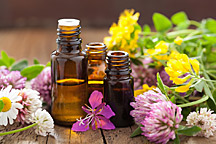
Essential Oils are typically distilled and highly concentrated
Pure essential oils are highly concentrated. It takes 5,000 pounds of rose petals to yield 1 pound of rose essential oil. Consequently, only small amounts are needed to have an effect. One to two drops go a long way. The effects of an essential oil can last anywhere from a few hours to a couple of weeks, depending on how long a person can hold that higher frequency. In my experience, I have found the average length of time is around two days.
Pure essential oils are highly penetrating: The penetrating characteristic of essential oils greatly enhances their ability to be effective. When applied to the skin, essential oils are absorbed directly into the body. An essential oil placed on the foot will be distributed to every cell in the body in 21 minutes. Inhaled, they will travel throughout the body in twenty seconds. They will even penetrate a fingernail or toenail to treat fungus underneath (lemongrass, melaleuca), and can penetrate into the deep crevices of gum tissue, in many cases, eliminating gingivitis and even severe gum diseases. The more toxic a person is, the more his cell membranes have thickened as a protective mechanism against the damaging effects of the toxins in his body. Essential oils have the ability to penetrate even thickened cell membranes, which explains why many times, they are effective when herbs alone are not.
Pure essential oils have been proven to increase oxygen to the body at a rate of 21%. Herbs and vitamins give us only about a 6 -7 % increase in oxygen, while mineral compounds and hydrogen peroxide provide a 9% increase. Many diseases cannot tolerate the presence of oxygen. Many bacteria are anaerobic, meaning that they can only survive in the absence of oxygen. These bacteria thrive in puncture wounds and in diabetics, and others whose oxygen levels are very low due to poor blood circulation and other factors. Cancer thrives in the absence of oxygen. When many kinds of microbes and cancer cells are exposed to oxygen, they die. Oxygen is a very powerful antioxidant.
Pure
essential oils are antiviral, antibacterial, antifungal, anti-yeast,
and many have anti-parasitic and anti-tumoral actions. There are
documented scientific studies of antiviral and antibacterial effects
of pure essential oils performed by research scientists around the
world. The latest results show some to be even more powerful than
antibiotics. Some stimulate digestion, while other act as
anti inflammatories. Some help to regenerate damaged tissue, and
others have a muscle relaxant effect. Some can be used as
hormonal precursors by the body so that it can produce as much or
as little hormones as it needs without upsetting the natural hormonal
balancing systems in the body.
Finally, essential oils have an alkalizing
effect on the body and are extremely high in antioxidants.
Scientists at Tufts University have developed a scale for the U.S.
Department of Agriculture called the ORAC test (Oxygen Radical Absorption
Capacity). The ORAC test determines how capable a particular
food is in destroying free radicals. The essential oil of clove
tested far higher than any food, making it an extremely potent antioxidant. This
strong antioxidant effect may explain why many distributors have
noticed a definite tumor-dissolving effect when using therapeutic
grade clove oil.
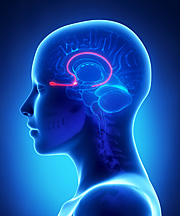
Inhaling Essential Oils
Affects the Brain
Through the
Olfactory Nerves
The limbic system is responsible for the emotions. It consists of the amygdala, the hypothalamus, thalamus, and pineal gland. The pineal gland is sometimes also referred to as the "third eye." In 1989 at New York Medical Center, Dr. Joseph Ledoux discovered the amygdala plays a major role in storing and releasing emotional trauma, and only odor or fragrance stimulation has a profound effect in triggering a response through this gland.
“A healthy body, from head to foot, typically has a frequency ranging from 62 Hz to 78 Hz, while disease begins at 58 Hz.” Essential oil blends typically have a frequency of 47 Hz To 192 Hz, although some of the single oils, such as rose oil, carry a frequency of 320 Hz. Disease starts at below 60 Hz. Frequency is the measurable rate of oscillation of electrical energy flow that is constant between 2 points (the number of waves, oscillations, or cycles per unit of time). Everything has frequency, including everything we see and everything we hear – colors, sounds, etc. Scientists measure the wavelength of light in Angstroms. According to Royal R. Rife, inventor of the famous RIFE machine which is reputed to have healed cancer, every disease has a frequency. He found that certain frequencies can prevent the development of disease and that others would destroy disease. Substances with higher frequencies destroy diseases of a lower frequency.
Hertzian Frequencies:
Bruce
Tainio has developed a device to measure the Hertzian frequency
of essential oils. (From Tainio Technology, an affiliate of Eastern
State University, in Cheny, Washington, who built the first bio-frequency
monitor in the world in 1992.) He measured the frequency of
the human body in different states of health as listed below. As
you will see, the frequency of the human body drops as it becomes
progressively more diseased. Therefore, a healing technique should
address the problem of how to raise the frequency back to the normal
levels of a healthy person. He also measured the frequencies of
different substances listed below.
Frequencies of the Body in Health and
Disease:
62-72 Hz……………… Healthy
Person
59 Hz …………………… Colds
57 Hz …………………… Flu
55 Hz …………………… Candida
52 Hz …………………… Epstein
Barr virus
42 Hz …………………… Cancer
Frequencies of Various Foods and Herbs:
52-320
Hz ………………… Pure essential
oils
20-27 Hz ……………………
Fresh herbs
12-22 Hz ……………………
Dry herbs
Up to 15 Hz ………………… Whole foods
Zero……………………………
Processed and canned foods
Impure, adulterated essential oils have also been tested and found
to possess very low frequencies and even zero on occasions. Conversely,
the pure essential oils measure considerably higher than even the
freshest of herbs. There is a potential to heal faster and
more deeply with essential oils than it is to heal with the finest,
strongest, purest herbs!
The
therapeutic grade essential oils with relatively lower frequencies
have more of a “physical” healing effect.The oils with
the middle frequencies make emotional changes in the body, and the
oil carrying high frequencies make spiritual changes in the body.
Keep in mind that a physical healing can be blocked by a failure
to heal emotions. In these cases, essential oils become even
more important in effecting an emotional healing/release.
A Brief History of Essential
Oils:
According
to ancient Egyptian hieroglyphics and Chinese manuscripts, priests
and physicians were using essential oils thousands of years before
Christ to heal the sick. They are the oldest form of medicine and
cosmetic known to man and were considered more valuable than gold.
The first use of essential oils was attributed to the Egyptians
and can be traced hack to 4500 BC. They soon realized that essential
oils not only had therapeutic properties, but were especially useful
for emotional purposes.The Ebers Papyrus, an Egyptian medical scroll
dating back to 1500 B.C., contains more than 800 herbal prescriptions
and remedies. Medicinal mixtures contained myrrh, oil and honey,
and the scroll indicates a high success rate in treating 81 different
diseases. Myrrh is still recognized for its ability to help with
infection of the skin and throat, and to regenerate skin tissue.
Biblical applications:
There are over 188 references to oils in the Bible.
The wise men brought the Christ child gold, frankincense and myrrh.
In Exodus, God gives Moses the formula for “an holy anointing
oil” (Exodus 30:22-25). Some of the precious oils which have
been used since antiquity for anointing and healing the sick are
frankincense, myrrh, galbanum, hyssop, cassia, cinnamon, and spikenard.
Frankincense:(Greek:Olibanum; Latin: Boswellia carteri or Boswellia thurifera) The oil is distilled from oleo-gum-resin of the frankincense tree. Its constituents are monoterpenes, pinene, limonene, sesquiterpines, gurjunene and terpenes alcohols.Therapeutically, it is being used in European hospitals for its anticatarrhal, antitumoral, immune-stimulating and antidepressant qualities.
Frankincense gained its legendary name as a "holy anointing oil" from the ancients, because they found when it was rubbed on sick people they would get well almost immediately. Additionally, they also found that when Frankincense is burned and inhaled, it increased their spiritual awareness and made them feel more "in tune" spiritually.
Modern science now shows us that frankincense has the ability to increase the oxygen around the pineal and pituitary gland, therefore stimulating the pineal gland through which we communicate spiritually. Practically speaking it has a centering effect on the emotions. It can slow respiration, thus helping your body calm and center itself. It's a wonderfully calming oil.
Frankincense has a delightfully sweet and slightly spicy odor. It can act as an expectorant, soothing congestion. It is a wonderful oil to blend into facial creams or oils to reverse aging skin. The ancients used it as well for embalming.
Myrrh: Smurna, hence the name "Smyrna," is a word of Semitic origin, from a root meaning "bitter." It is a gum resin from a shrubby tree, which grows in Yemen and neighboring regions of Africa. The fruit is smooth and somewhat larger than a pea. The color of myrrh varies from pale reddish-yellow to reddish-brown or red.Its constituents are sesquiterpenes, acetones and aldehydes
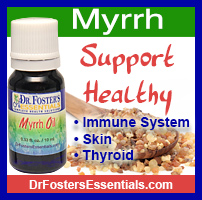
Myrrh Essential Oil
It is thought the myrrh that Christ refused just before His death was intended to deaden pain. The ancients embalmed their dead with myrrh, because of its antibacterial qualities.
2,000 years ago, Frankincense and Myrrh were precious beyond the value of gold. Their healing powers were viewed then as "magical." The most precious gift one person can give another is life! The three magi offered exactly that to the Christ child, gifts of life-saving essential oils.
During the great plague of the Middle Ages, essential oils were the best antiseptics available, and it was widely reported that perfumers (the forerunner of the modern distiller) were virtually immune to the Plague. By the turn of the eighteenth century, essential oils were being comprehensively applied in medicine, and in the nineteenth century, as the antiseptic properties of many essential oils were being fully investigated, the perfume industry was seeing incredible growth, especially in France. Up until the last century, medical practitioners still carried a little bag filled with aromatics on top of their walking sticks, to be inhaled when visiting contagious cases.
Aromatherapy is
Born in Europe
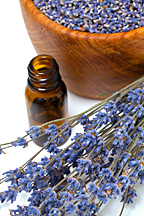
Therapeutic Grade Lavender Oil
Intending to cool the burn, he saw that his colleague had just brought in a container from the cooler. Thinking the container was filled with water, he immediately plunged his arm into what was really a vat of lavender oil. To his surprise, the burning sensation slowly decreased and then stopped within a few moments.
Over a period of time, with the continual application of lavender oil, the burn healed completely without a trace of a scar. As a chemist, he analyzed the essential oil of lavender and discovered that it contained many substances referred to as chemical constituents or chemical properties.
This rediscovery of essential oils led to a greater awareness of the potential of essential oils during and after World War II, and aromatherapy began to be taught in medical schools throughout France, Germany and England. More and more European doctors started practicing with essential oils again, after having seen the devastating effects of antibiotics and other synthetic medicines. In Germany, basic knowledge of the distilling process of essential oils, and the proper blending of different oils is an absolute must in the curriculum of every pharmacist.
Learn more:
About the author:
Dr. Cynthia Foster, M.D.
A Conventionally Trained Medical Doctor Who Left Medicine Almost 20 Years Ago to Practice 100% Holistically
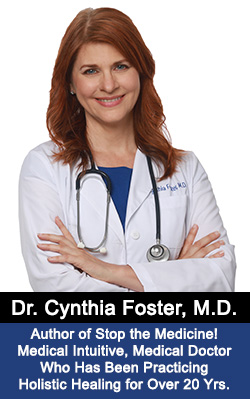 After receiving a required Hepatitis B vaccine for entry into medical school, Dr. Cynthia Foster became severely ill with grand mal epileptic seizures. The seizures occurred twice daily for almost four years – almost the entire time she was in training to become a conventional medical doctor at the University of Texas Health Science Center. Putting her life into the hands of a very experienced holistic nurse who was using holistic healing methods with unprecedented and extraordinary results, she refused all medications or other medical interventions for the seizures.
Using only natural methods as her treatment, the seizures went into complete remission, and she has been seizure-free for over 20 years. Her first book Stop the Medicine tells the incredible story of her miraculous recovery as well as giving a behind-the-scenes look at the Modern Medical Establishment. In her search for healing, she has traveled the world learning and incorporating natural methods into her holistic practice, including herbal detox, natural supplements, aromatherapy, hydrotherapy, energy healing, mind-body medicine, healing visualizations, juice fasting and therapeutic foods.
After receiving her MD degree, and refusing to practice medicine because of the miraculous healings she had seen in others and experienced for herself, she began her practice using only natural methods to heal her patients, specializing in teaching people how to heal themselves with simple remedies and techniques, and has been able to repeat the miraculous healing results with her patients that she herself had personally experienced.
Over the past 20 plus years, she has served many roles including not only healing practitioner, but also herbal product trainer and spokesperson for herbal product companies, and also founded her own pharmaceutical strength herbal product line called “Dr. Foster’s Essentials” to address the health problems she was seeing in her practice. She noticed over a period of two decades of seeing patients, that they usually brought her grocery bags full of so-called “natural” supplements that simply did not work. She founded Dr. Foster’s Essentials, insisting on including herbal extracts up to ten times stronger than what is traditionally available in grocery stores, drug stores health food stores, and even online, as she felt these “mass-marketed” remedies were too weak and watered down to heal anything as serious as what she had experienced with the epilepsy.
A highly sought after speaker and university instructor, she has lectured worldwide on a wide range of topics from the use of herbs to emotional healing to conventional medicine classes for acupuncture students. She has been interviewed numerous times on radio programs and mentioned in the press as well as featured in magazines, newspapers, and on television. Current projects include a second book describing how to use herbs and natural healing techniques to overcome life-threatening, chronic and incurable health issues.
"To Perservere, Trusting In What Hope He Has, Is Courage.
The Coward Despairs."
- Euripides
|
|
Join the Conversation:


Health Practitioners |
Contact Us |
Track My Order |
Return Policy |
Privacy Policy |
Terms of Use |
Shipping Info |
Sign In |
Product Quality
Copyright © 2018 DrFostersEssentials.com. All rights reserved
Los Angeles Web Design